Anúncios
In this guide, you will learn:
- What a pipefitter does and where they work
- How much you can earn and how to interpret salary ranges
- Step by step how to enter the career and apply for jobs
- Benefits of the profession and growth paths
- Practical tips to increase your chances of being hired
Job Openings
Pipefitter Jobs Paying Up to $105,000/Year
You will be redirected to another website
Where opportunities usually exist
Demand for pipefitters appears mainly in:
- Industry and industrial maintenance
- Metal-mechanical assembly projects
- Project-based work (temporary contracts)
- Industrial shutdowns (hiring peaks)
- Hydraulic systems and technical piping
The role may also appear under similar job titles:
- Industrial pipefitter
- Piping installer
- Pipefitter–metalworker
- Pipefitter
Salaries: general average and how much a pipefitter can earn
Earnings vary according to experience, country, specialisation, type of project, overtime, and work arrangement.
Observed general average
- Approximate average: €18–€24 per hour
- Qualified professional: €22–€28 per hour
- Industrial projects and specialised maintenance: €25–€32 per hour
Realistic ceiling
In higher-paying markets, experienced professionals can reach around €30 to €32 per hour.
Countries that usually pay better for pipefitters
Without relying on a single market, the highest earnings are commonly found in:
- Germany
- Netherlands
- Belgium
- Norway
- Denmark
In these locations, the combination of strong industry, technical maintenance demand, and higher cost of living drives up pay levels.
What a pipefitter actually does
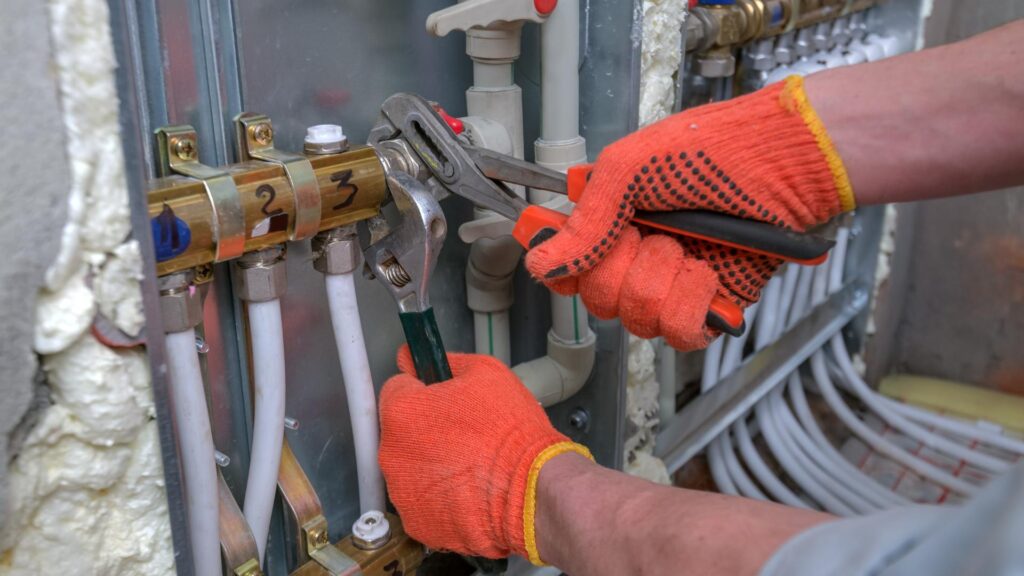
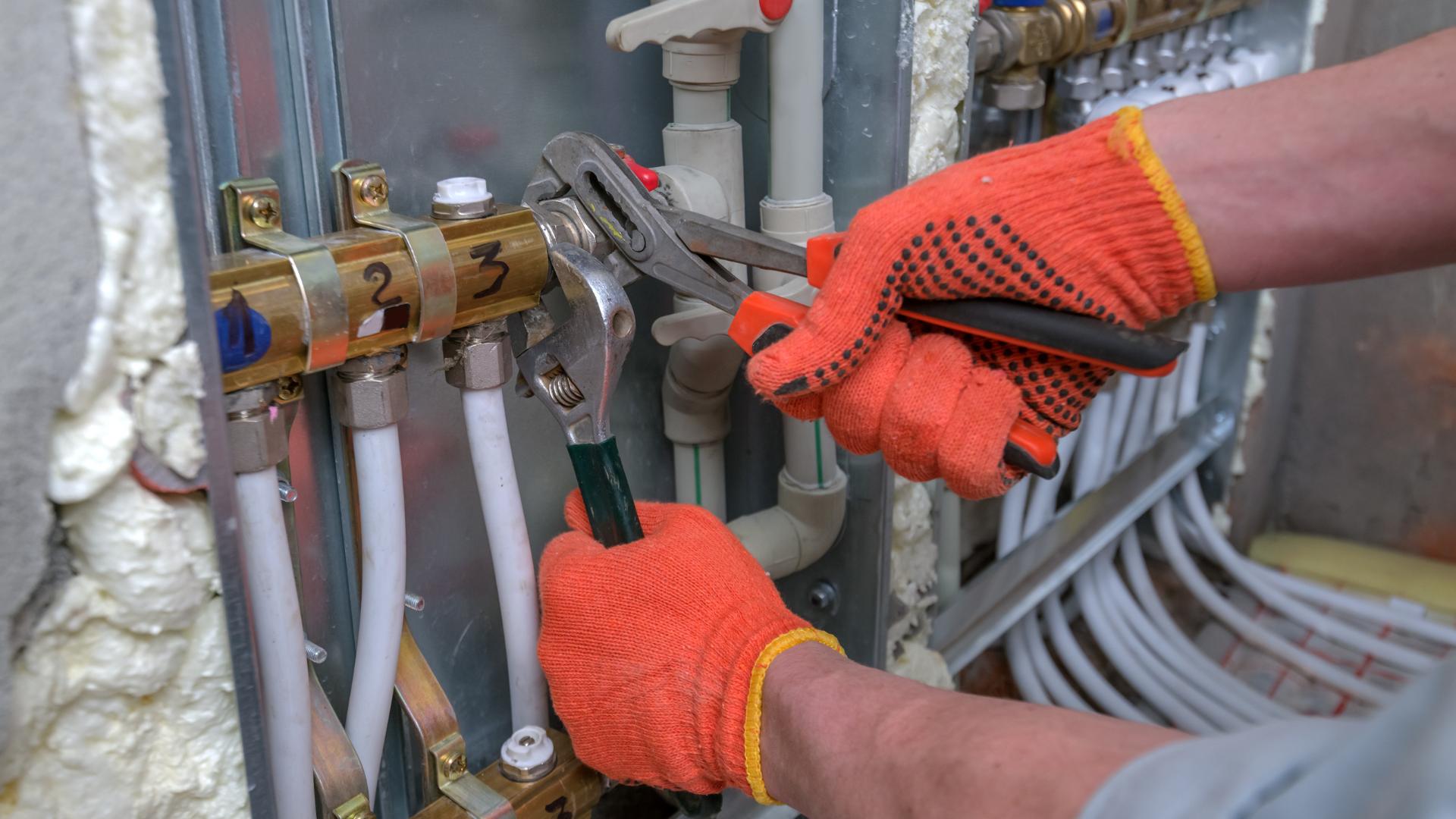
A pipefitter works with the assembly and installation of piping systems (stainless steel, carbon steel, copper, special alloys, and technical materials), including components such as flanges, valves, supports, fittings, and joints. In an industrial context, this includes:
- On-site assembly and alignment adjustments
- Pre-fabrication of sections (prefab) in a workshop
- Replacement and repair of existing lines
- Preparation, measurement, and marking of parts
- Leak testing and functional checks
In many projects, the pipefitter works alongside welders, metalworkers, industrial mechanics, and maintenance teams.
Why choose a career as a pipefitter?
- Constant demand
Wherever there is industry, maintenance, or expansion, there is a need for well-installed piping. - Practical, visible work
You can see your work operating in real conditions, something many technical professionals value. - Fast growth for those who deliver quality
Pipefitters who can read technical drawings, measure accurately, and assemble precisely tend to progress faster. - Professional portability
Experience can be applied across different sectors and regions. - Potential for higher earnings
With experience, specialisation, and availability for more demanding projects, income increases significantly.
Step by step: how to enter a pipefitting career
To work on projects and with companies, you usually need formal proof in addition to experience: certificates, safety training, and/or technical qualifications.
The exact requirements vary by country, sector, and client, but it is common to require at least training or a course in the field, HSE safety training, and in many cases qualifications related to the type of piping and environment (industrial sites, maintenance, shutdowns, etc.).
Without this, you may have the skills, but you are likely to be filtered out in the initial hiring stage. Below is how to get started:
Step 1 — Choose the type of pipefitter
Define which path makes the most sense:
- Industrial pipefitter (heavy construction and maintenance)
- Piping installer
- Pipefitter combined with metalwork
- Pipefitter with welding knowledge
This helps determine which courses and certificates are most relevant and which vacancies to target.
Step 2 — Build the technical base and required training
You do not need to be a specialist at the beginning, but you should master:
- Measurement and marking
- Identification of components
- Basic material knowledge
- Assembly and alignment
- On-site safety
For international projects, make sure your plan also includes:
- Safety training (HSE) appropriate to the type of site
- Certificates/qualifications required by the client (vary by sector and country)
- Proof of experience (records of projects, roles, and activities)
Important differentiators:
- Ability to read technical or isometric drawings
- Practical experience (even as an assistant)
Step 3 — Build a strategic CV (with proof)
Your CV should be technical, clear, and objective. Include:
- Assembly and pre-fabrication of piping
- Use of tools and measuring instruments
- Maintenance and repair work
- Drawing reading (if applicable)
- Types of materials worked with
For jobs in Europe, highlight a “Certificates and Training” section with:
- Relevant technical courses
- Safety training (HSE)
- Specific qualifications (when applicable)
- Dates and institution/company (when possible)
Evidence helps a lot:
- Photos of authorised work
- A simple list of sites or projects
- Professional references
Step 4 — Enter through the right door
If you are just starting, look for roles such as:
- Assembly assistant
- Industrial helper
- Junior installer
- Metalwork roles with progression to pipefitter
These positions are common entry points to gain hands-on experience and verifiable hours.
Step 5 — How to apply for jobs correctly
- Adjust the CV title
Use the job title (Pipefitter, Piping Installer). - Use technical keywords
For example: assembly, pre-fabrication, measurement, alignment, maintenance. - Simple message to the recruiter
- Desired role
- Main experience
- Availability
- Contact details
- Desired role
Also mention your certificates and training clearly and objectively (when you have them), as this often unlocks the screening process.
Step 6 — Prepare for interviews and practical tests
They usually assess:
- Measurement accuracy
- Assembly alignment
- Organisation and safety
- Teamwork
- Ability to follow instructions
Practise explaining your role clearly and objectively, and be ready to present certificates or training if requested.
Where to look for jobs
Search using multiple terms:
- Industrial pipefitter
- Piping installer
- Pipefitter–metalworker
- Pipefitter
This broadens results and increases the number of opportunities found.
How to grow and earn more
Progression depends on consistency and quality.
Common path:
Junior pipefitter → intermediate → senior → foreman → supervisor
What increases professional value:
- Independent drawing reading
- Clean and precise assembly
- Impeccable safety standards
- Reliability on site
- Leadership ability
Valued specialisations:
- Industrial shutdowns
- Precision piping
- Hybrid profiles (pipefitter + metalwork or welding)
Practical tips that increase your chances
- Be punctual and reliable — this matters a lot on site
- Keep your CV organised (avoid excessive text)
- Learn continuously on the job
- Treat safety as a priority
- Build a reputation — referrals create new opportunities
Conclusion
The pipefitting profession is solid, practical, and in constant demand in industrial and maintenance environments.
Qualified professionals can reach around €30 to €32 per hour in higher-paying markets, with earnings varying according to experience, specialisation, and type of project.
The path in is straightforward: choose your track, build a technical foundation, organise your CV, and apply strategically. From there, growth depends on the quality of your work, discipline, and consistency.
Those who deliver precise, safe, and reliable assembly build a stable career and open doors to increasingly better opportunities.